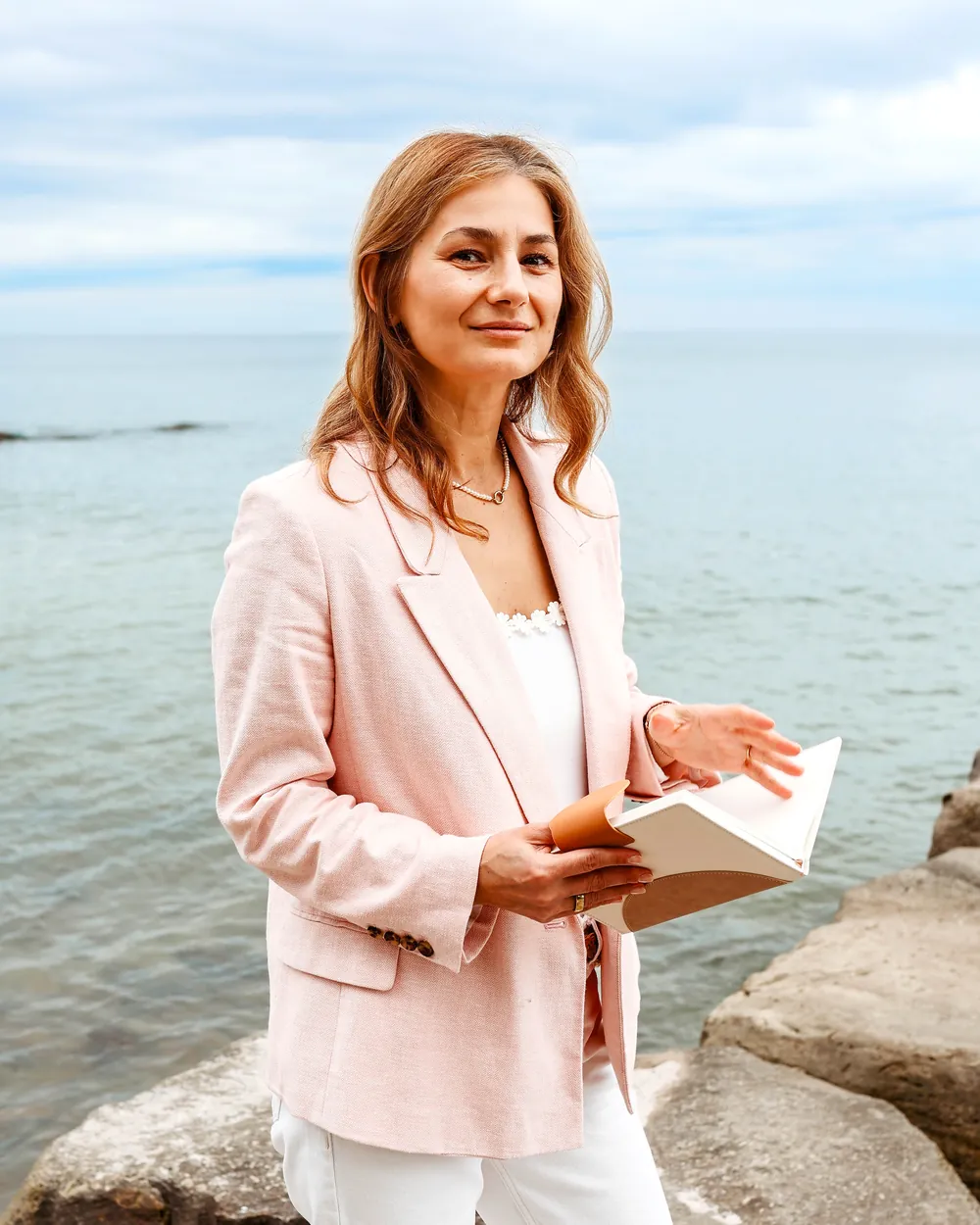
I’m a professionally trained coach with more than 20 years of experience working inside organizations, across industries, cultures, and countries.
My career began in technology and evolved through business and solution consulting, working closely with leaders, teams, and clients through growth, transformation, and complex decisions. Whatever my title was, the moments that stayed with me were never about the project. They were about people: helping someone grow, see a situation differently, or finally understand a colleague from another culture.
I completed my professional coach training through the International Coach Academy (ICA), an ICF-accredited coach training program, and I’m currently working toward the Associate Certified Coach (ACC) credential from the International Coaching Federation (ICF).
I was born in Romania and have lived and worked in five countries. Italy was home for more than ten years. I arrived in Milan confident in my Italian, and discovered in my first open-plan office that speaking a language is not the same as belonging. In Málaga, the slower Andalusian rhythm showed me that a transition can bring ease, not only effort. I returned to Milan, spent seven months in Paris, and three years ago chose to begin again in the United States.
Each move asked me to rebuild my routines, my confidence, and my sense of who I was, at work and at home. So if you are in the middle of a transition, I know the feeling from the inside: capable on the outside, quietly rearranging everything within. It was never simply starting over. Each time, it was going further in.
What shaped me wasn’t simply learning different languages or working internationally. It was living inside different cultures, repeatedly becoming the person who didn’t automatically know the unwritten rules.
I learned that directness can feel like honesty in one environment and harshness in another. Silence can mean reflection, disagreement, respect, or discomfort. Initiative, hierarchy, feedback, trust, and even “professionalism” can carry very different meanings depending on where you are.
Over time, I became a kind of translator, not just of language, but of context, perspectives, and expectations. Helping people understand not only what someone was saying, but where they might be coming from.
Every move made me a beginner again. I had to question assumptions I didn’t even realize I had and learn that there is rarely only one “normal” way to work, communicate, succeed, or live.
Becoming a parent brought those questions even closer to home. It made me reconsider ambition, identity, time, and the role I wanted work to play in my life. Eventually, I chose to step away from a successful corporate career and create space for something different. Not because what came before was wrong, but because I had changed.
That is the perspective I bring to coaching today. I work with people who have become highly skilled at adapting (to countries, careers, organizations, roles, and other people’s expectations) and want to understand what is genuinely theirs before deciding what comes next.
Sometimes the most important question isn’t “How do I adapt better?” It’s “What do I want to choose now?”
Living across five countries taught me to listen beyond words. Understanding someone often meant becoming curious about the context behind what they said: their culture, assumptions, expectations, and experiences.
Coaching asks for that same kind of curiosity. Only now, some of the questions turn inward: What have I adapted to? Which expectations are actually mine? What still fits? What matters to me now?
The Quiet Compass grew from that idea. A compass does not tell you where you should go. It helps you orient yourself. And sometimes, after years of adapting to everything around you, the most useful thing is enough quiet to hear your own direction again.
You don’t need someone else to give you the direction. Sometimes you need enough space to hear your own.